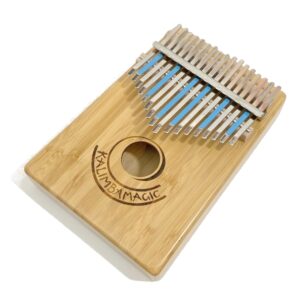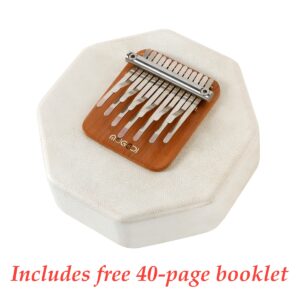
![]() |
|
|
Copyright © 2005-2008 Mark Holdaway |
KTabS is Kalimba Tablature Software, a new exciting program that helps you write your own kalimba tablature. The program also plays tablature, both visually and through your computer's speakers.
Where can I get KTabS? You can buy your own copy of KTabS for $30, or the KTabS Reader for $5, at http://ktabs.theirhouse.org, or you can download trial versions of either.
What is the KTabS Reader? The KTabS reader permits you to play existing KTabS-format songs on your computer, both visually and through your computer's speakers, but does not permit you to edit that song or to create now songs.
Where can I get KTabS-format songs to play with the KTabS reader or the Full KTabS program? Currently, there are three places: free KTabS songs are available from Kalimba Magic's Tip of the Day pages and from the KTabS community (register at KTabS and then go to the MyKTabS page). And there is a growing library of KPacks at the KTabS Store.
What is a KPack? A KPack is a bundle of songs or exercises written out in KTabS format. Currently, KTabS has KPacks for $5 that match the following Kalimba Magic Books: the Alto Fundamentals Book, the Treble Fundamentals Book, the 8-Note Book, the Christmas Book (in both Alto and Treble versions), and Playing the Pentatonic Kalimba. In addition, brand new Classical Alto and Classical Treble KPacks are available for $10.
On which computers does KTabS run? Computers running Windows 98 or more recent, with a MIDI sound card.
How are KTabS and Kalimba Magic related? Kalimba Magic is a business run by Mark Holdaway, who writes kalimba instructional books, records kalimba CD's, and sells Hugh Tracey Kalimbas. KTabS is a project run by Randy and Sharon Eaton, who wrote the KTabS software. They are independent entities (you can't buy Mark's books from the KTabS site, and you can't buy KTabS from the Kalimba Magic site), but they are collaborating to provide the kalimba community with the best kalimba music available. In addition to their collaboration on the various KPacks, the new Pentatonic Book automatically comes with a license for the KPacks Reader and the Pentatonic KPack.
Hints on using KTabS: There is good documentation at KTabS at: http://ktabs.theirhouse.org/docs/docs.php If you are using KTabS to teach you to play kalimba, you may want to edit the tempo to slow the song down to make it easy for you to play along. (This requires the Full KTabS Software.) If you want to really get in the groove, you can set the number of repeats to 10 or 20, going over and over the song without interuption. If you are having trouble with a certain phrase, you can insert repeat signs at the start and end of the phrase to make that section repeat over and over. I like setting KTabS to play some music, and then while the computer plays that, I invent some other part to play along. If you have a kalimba in a different key, or a different number of tines, you can create a KTabS template for your kalimba's tuning so you can write music for YOUR kalimba. You can link two different songs together (ie, ALTO "Row row row your boat" and TREBLE "Row row row") and play them at the same time. Or, write a harmony part to an existing song, and play them both back together to make sure they work. Then play one back with KTabS, and the other part you play live. KTabS is a new and exciting portal to the Kalimba world - there are still dozens of ways of using KTabS that nobody has thought of yet - will you be the one to figure out those new ideas? If you come up with a nifty idea on how to use KTabS, drop us a line!
Which kalimba is best for me? My favorite is the ALTO. With exactly two octaves (the bottom note and the top note are both G, the root of the G major scale), it is easy to understand, the tines are wide, and you have the resonant box to make funky wah-wah sounds. People with smaller hands prefer the TREBLE. For young people (say 10 and under) the board pentatonic or the 8-note are good choices. (The 8-note kalimba, with book, will be available around May 1.)
If the alto is bigger than the treble, why does it have fewer tines? The ALTO has 15 tines, the smaller (and higher pitched) Treble has 17 tines. The ALTO's tines are wider, and the instrument is lower picthed, so the instrument is larger than the Treble.
There are many kalimbas on the market that are much cheaper than the Hugh Tracey Kalimba. Is the Hugh Tracey worth it? Our biggest competitor is the Pakistani-made "Large Rosewood Kalimba", distributed by Mid-East Mfg. If you held one in your hands, you would see that it is a nearly exact copy of the Original Hugh Tracey Treble Kalimba. I think they are called "knock offs". It might even look better on your coffee table, as they have a very nice gloss finish on their kalimba. However, if you want to use the kalimba as a musical instrument, there is no comparison. The Pakistani kalimba's tines hurt my thumbs (and I've been playing the Hugh Tracey Kalimba for 20 years, 19.5 of those years without any pain). When you buy the Pakistani kalimba, it is often not tuned. My girlfriend bought one a few years ago, but within 4 months, three of the tines went dead and would not ring, just "thud". I can usually fix such problems on the Hugh Tracey kalimbas, but no luck on the Pakistani kalimba. One person who bought a Hugh Tracey Treble from me to replace her Pakistani kalimba told me that her Pakistani kalimba was unplayable from day one. After her Hugh Tracey kalimba arrived, she wrote "This is what a Kalimba SHOULD be!" Add to that the legacy of the Hugh Tracey Kalimba. Hugh Tracey spent his life studying and promoting African music. The Hugh Tracey Kalimba was the first kalimba to be commercially available outside of Africa in the early 1960's (thats what it means when they print "The Original Hugh Tracey Kalimba" on the box). The Hugh Tracey Kalimba is made from Kiaat, a native African hardwood (not from Indian rosewood). The Hugh Tracey Kalimba is made by African hands, and the jobs that African Musical Instruments (AMI, the maker of the Hugh Tracey Kalimba) provides are in Africa. The Kalimba is a uniquely African musical instrument. Africans have been playing the kalimba for about a thousand years. Don't you think it counts for something to honor that tradition by buying an African kalimba? There are some skilled artisans in America that make excellent kalimbas. Some of these rival the Hugh Tracey in quality. Some brands have various problems, like being almost impossible to tune, or having a thin tone, but most are reasonably good. A few people in the US are making kalimbas which are true works of art. However, these aren't made in Africa.
How do the Hugh Tracey Kalimbas compare with some of the cheaper board kalimbas for students? The US-made board kalimbas such as Catania or Thumb Drum run for about $30-$40 for a one octave model. The Hugh Tracey ALTO kalimba has two octaves, so right there, it is worth twice as much. In addition, you have the added value of the resonating box, which gives you all sorts of cool sounds. And finally, you have the value of knowing that this kalimba comes from Africa, the ancestral home of the kalimba.
How do the pickups work on the Huge Tracey kalimbas? The pickups are piezo-electric devices with a 1/4 inch jack. Plug them into an amplifier with a guitar chord. For recording, I prefer the sound you get with a microphone, as the pickups don't get very much of the air sound (ie, the wah and vibrato), just the vibrations of the wood. If you want to use an effects processor, or if you want to be heard over the band, this is a good way to go. The pickup does not influence the straight acoustic sound in any way. For $10-$15 extra, I think it is definitely worth it. After my third shipment of kalimbas, I recognized that the good folks at African Musical Instruments (AMI) have greatly improved their pickups. What is improved? No more short-outs, and better placement of the pickup to get more of the high notes.
Why are there so many kalimbas dated 1966 available on ebay? I couldn't get a straight answer as to exactly when Hugh Tracey formed AMI -- Paul says the first prototype kalimba was made of metal around 1958, and AMI was formed shortly thereafter. The first kalimbas were Trebles, and the Altos followed shortly after. However, in 1966, Hugh Tracey designed a nice little insert for the kalimba boxes with simple instructions on how to play some things, and that insert says "copyright Hugh Tracey 1966". IN FACT, if you buy a kalimba from me today (2006), you will get that same insert that says "1966". (Please don't sell it on eBay saying it is a vintage 1966 kalimba).
How have the Hugh Tracey kalimbas changed over the years? I have a Treble that was probably made around 1960. It has bicycle spoke bolts on the back holding the "z-bracket" down. Kalimbas made in the 1960's, 1970's, and 1980's have a much thinner top. A perenial problem with them is that one or two notes would go dead and the tops would crack. (If you have a dead note, try playing with an earplug stuffed in one of the back sound holes - it has solved that problem on at least one kalimba I've played.) Recently, AMI has sought to address these issues by making kalimbas with a thicker piece of wood on the top. The thicker wood does seem to prevent the notes from going dead, but cracking is still a problem. Frank Gacon, a wood-working friend of mine, suggests treating the kalimba wood with oil periodically to prevent cracking. In addition to the thicker wood, the tines tend to point up more now than the older design. I have taken a new kalimba apart and sanded down the wooden part of the bridge. Upon reassembly, the kalimba tines were more flat, not pointing up. It gave a mellower sound, less bright. The new design's brighter sound may very well be desired, though -- even though I love the feel of my 1980 Alto, blind comparison of recordings lead me to say that the new Hugh Tracey Kalimbas sound better. The thicker wood and more upward-pointing tines result in the kalimbas not quite fitting in their boxes.
How do you tune the kalimba? The kalimbas all come tuned to the key of G, except for the karimba (with an "R"), which is very close to the key of A. However, you can tune them any old way you want. Use an electronic tuner to tell you if the note is in tune or not. The ALTO Fundamentals Book and the TREBLE Fundamentals Book will show you how to tune in a bit more detail.
Are there alternate tunings? Yes, check out the tunings page.
Why does AMI use a western scale for an African instrument? Ah, thats a very good question! Hugh Tracey travelled about Africa recording traditional music and documenting the scales that different villages and groups of people used. There was a wide diversity of scales. Scales with 5, 6, and 7 notes were found, but the exact tunings of these scales would be different for each group. Kalimba-like instruments were widely used in Africa, and hundreds of tunings were used. So, what should be the strategy? To market the 5 most popular scales? To market every scale? Or to market the scale that the western ear has grown accustomed to? Also remember that this western scale has now taken over the African ear as well. By the way, you CAN tune the kalimba to whatever scale you want. Unlike a wind instrument where the relative tuning of all the notes is fixed(you can tune all the notes up or down together), or a guitar where the different strings can be tuned, each note on the kalimba must be tuned, so you can really tune a kalimba to any scale you desire. For one African scale, check out the traditional tuning for the KARIMBA (yes, with an "R").
The kalimba tines hurt my thumbs. What should I do? OK, first thing is to grow your thumb nails. They will act as your picks and protect your thumb flesh. After a while, you will get some caluses which will help. With nails and caluses, I am able to play kalimba for 5-6 hours a day without experiencing any pain. There is a new guitar finger pick called the Alaska pick which can fit onto your thumbs for protection. I can vouch for this solution. Check out these videos showing me playing the 8-note kalimba with Alaska picks: Alaska picks 1 Alaska picks 2 If you are a normal-sized adult, get XL (that would be for an XL finger, which fits on my normal-large thumbs; children might use M or L; S would be about right for a 2 year old).
Is there any music written for the kalimba? I have begun a campaign to popularize the kalimba, and the first thing I have done is to invent an easy-to-read tablature for kalimba. Next, I wrote several books. Third, I think I'll go write some more books! So, there is some music, and soon there will be more. So, why are some tines colored? Why are some red and some blue? Are the colored tines the "black notes" on the piano? There is no difference between red and blue. The colored tines are not the black notes on the piano. Conceptually, the kalimba just has the white notes on the piano (well, actually they are in the key of G, so they have an F#, but you can think of them as just having the white notes). The colored tines help you find your way on the kalimba. They help you remember where the different notes are, help you relate the left side to the right side, help you relate one kalimba to another (the Treble and the Alto have the same notes colored), and they help you transfer notes on Kalimba Tablature onto the Kalimba!
Does the kalimba come with a case? My wood-working friend Frank Gacon now builds kalimba cases. At this point, they hold a book and two kalimbas and are about $70. As we begin building in bulk, that price may come down. They are really nice cases: They aren't yet for sale on our merchant site, but write us an email and let's see if you can make one that fits your specifications on the inside. Do you have an unanswered question?If so, please contact me and I'll get you an answer right away. Take care, |