Kalimba Magic banner
LEARN ABOUT THE KALIMBA
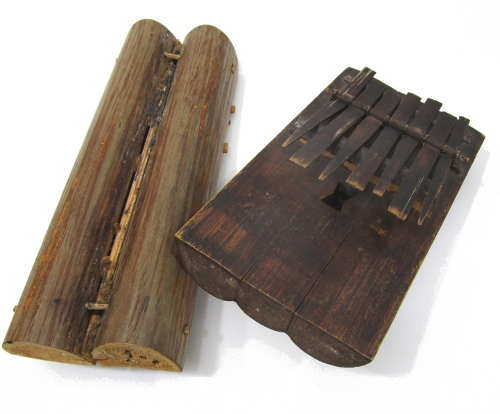
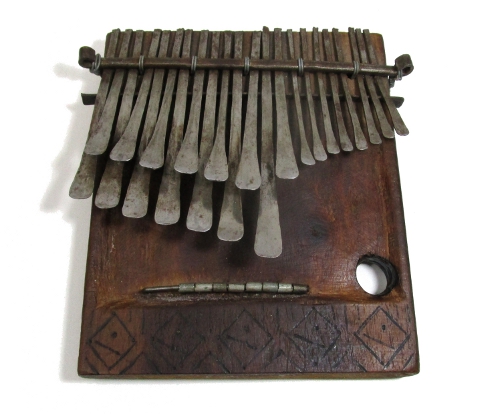
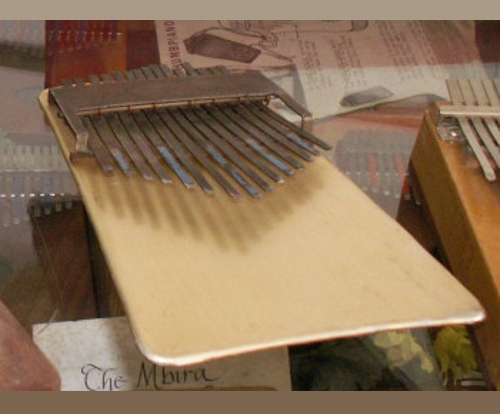
The mbira or thumb piano is the ancestor of the modern day kalimba. The first Europeans to record seeing mbiras were Portuguese explorers who came to Africa in the 1400's. They found the instruments to be very odd. The tuning was largely non-western; perfect 5ths were present in the tunings, but other intervals didn't fit the still-evolving western paradigm very well.

In the Zambezi Valley, around present-day Zimbabwe, mbiras evolved into very complex instruments with very deep music which is highly integrated into the culture. Many scholars presume that the metal-tined mbiras originated here, far from where the Portuguese first saw them. Indeed, I have heard that some creation myths from this area tell of how The Creator gave metal to the human race for the express use of making mbiras. We might assume that the mbira dates back to the first use of metal in Sub-Saharan Africa.

Think about connecting what we do know - that mbiras were widespread and had evolved into different regional styles by the time the Portuguese came in the 1500's - to what we imagine back in history, that the idea of the mbira was born somewhere in the Zambezi Valley and then spread throughout Africa. But as the mbira spread, each group of people made their own version of it. This means that each group made modifications to the instrument design, such as how many tines the instrument had or what sort of board or gourd they are mounted on or in. But it also meant that each group of people developed their own tunings, and their own music.

Furthermore, each group of people used the mbira differently in their social lives. In some African cultures, the mbira and its modern descendent the kalimba is the personal instrument of choice, something to take with you to help you pass the time tending cattle or riding the bus. In some places, it is an instrument of celebration for weddings. It is an instrument to accompany the voice. And in some societies, it is a tool to attract the spirits of ancestors, to bring them back for a time so that their advice might be heard.

The mbira/kalimba is many different instruments, and plays many different roles across Africa. And this slow spread and differentiation in the instrument had already occurred 600 years ago. It is easy to imagine that this process took a long time. Perhaps 400 years? Well, that gives us a nice round age we can assign to the kalimba: 1000 years old.